Ravenhill
Ravenhill is a rocky height on the southwestern spur of the Lonely Mountain, a strategic vantage point that once served as a watch-post for the dwarves of Thror's kingdom. In the narrative of The Hobbit, it becomes the focal point of the climactic Battle of Five Armies, where the fate of the treasure, the mountain, and the surrounding lands is decided. It is here that Thorin Oakenshield makes his final sortie, here that Bilbo Baggins witnesses the arrival of the eagles, and here that the King under the Mountain receives his mortal wounds, marking the tragic culmination of the quest.
Geography and Ancient Function
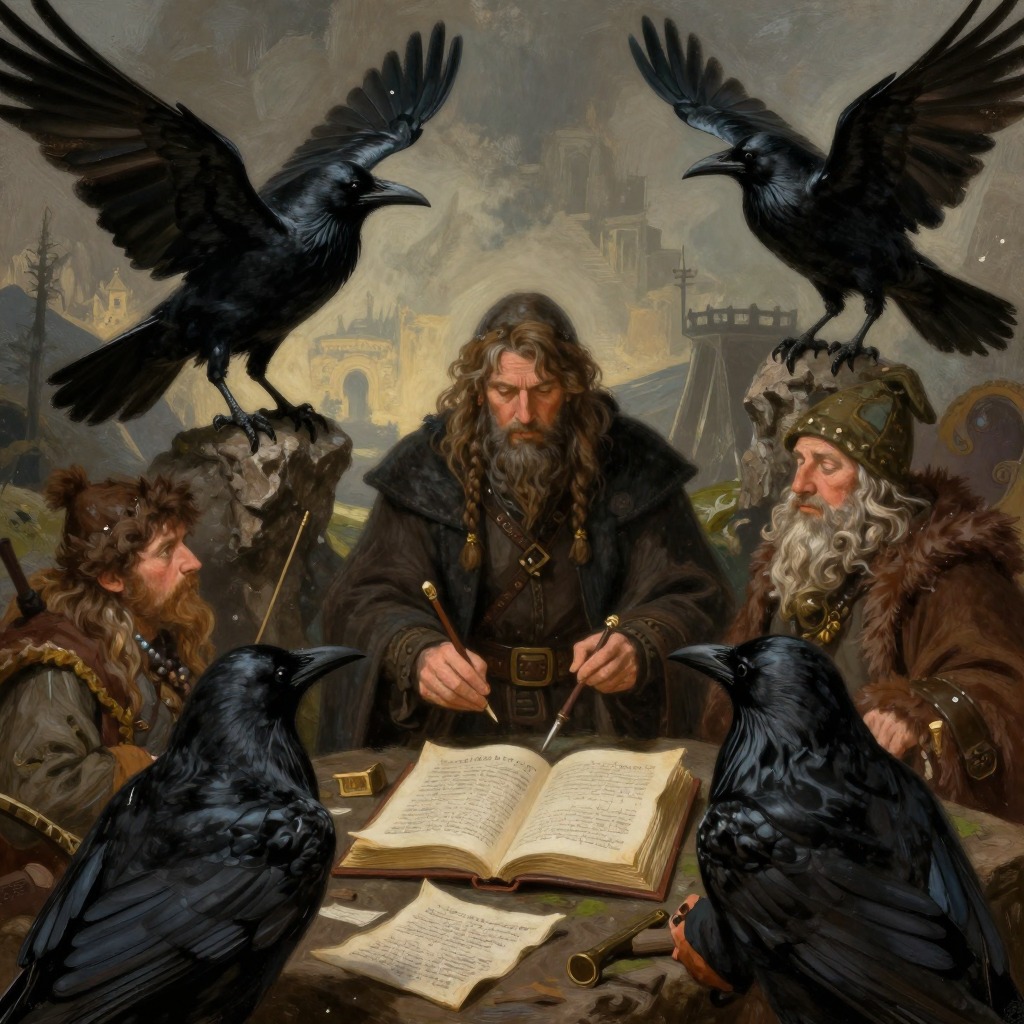
Ravenhill is located at the end of the great southern spur of the Lonely Mountain, a position that commands a wide view east, south, and west over the valley of Dale and the lands beyond. In the days of the dwarves' prosperity, it was one of several fortified look-out posts around the mountain, with a rock-hewn guard-chamber behind it. Balin recalls that in the old days watchmen were always kept there, though the guards grew over-comfortable in times of peace, which may have contributed to the lack of warning when Smaug attacked. The hill takes its name from the ravens that once lived there, particularly the wise and famous pair, old Carc and his wife, who dwelt above the guard-chamber. By the time of Thorin's company, the post is deserted, but it remains a defensible position with a door leading into a chamber that could hold a hundred.
Strategic Role in the Siege and Battle
After the death of Smaug and the arrival of the armies of the Lake-men and the Wood-elves, the dwarves under Thorin fortify the Front Gate. When Dain and his dwarves from the Iron Hills arrive, the combined forces of elves, men, and dwarves take up positions on the mountain's spurs to meet the goblin assault. The Elvenking and his forces are set on the southern spur, near Ravenhill, while Bard and the men hold the eastern spur. During the battle, the goblins scale the mountain from the other side and attack the spurs from above, and the defenders are slowly beaten back. Bilbo Baggins, wearing his ring, takes his stand on Ravenhill among the elves, partly for a chance of escape and partly because, with the Tookish part of his mind, he prefers to defend the Elvenking in a last desperate stand. Gandalf is also there, sitting as if in deep thought, preparing some final magic.
The Eagles' Arrival and Thorin's Fall
As the battle seems lost, Bilbo looks round from Ravenhill and sees a sight that makes his heart leap: the eagles are coming down the wind, line after line, in a host gathered from all the eyries of the North. He cries out, "The Eagles! The Eagles!" and the cry is taken up across the valley. At that moment, a stone hurtling from above smites heavily on his helm, and he falls with a crash and knows no more. When he comes to himself, he is lying on the flat stones of Ravenhill, alone, with a cloudless but cold day above him. It is there that a man sent by Gandalf finds him, and carries him down to the camp in Dale. It is also on Ravenhill that Thorin Oakenshield, having led a desperate sortie from the Gate, is struck down. Beorn, appearing in bear's shape, lifts the fallen Thorin and bears him out of the fray, but the dwarf-king dies of his wounds shortly after.
Narrative and Thematic Significance
Ravenhill functions as a narrative pivot, the point from which the turning of the battle is witnessed and the place where the hero's journey reaches its most somber resolution. It is the site of Bilbo's last conscious moment in the conflict, his cry for the eagles marking the shift from despair to hope, even as he is struck down. The hill also serves as the final setting for Thorin's story: it is here that the King under the Mountain, having reclaimed his treasure but succumbed to dragon-sickness, makes his last stand and dies, reconciled with Bilbo. The ravens that give the hill its name are echoed in the figure of Roäc, who brings news of Smaug's death and of the approaching armies, linking the ancient watch-post to the unfolding events. In the aftermath, Thorin is buried deep beneath the Mountain, and the Arkenstone is laid upon his breast, while Orcrist is placed on his tomb, where it gleams ever in the dark if foes approach. Ravenhill thus stands as a monument to both the victory and the cost of the quest, a place of watching, of last stands, and of final farewells.